


Professional Wheel Cleaning: Effective Automotive Detailing Solutions
When detailing a vehicle, the wheels are among the first features people notice. Clean, polished rims enhance the overall appearance of a car, while accumulated brake dust, road grime, and oily residue can make even a freshly washed vehicle look neglected. For professional detailers and automotive enthusiasts, choosing the right wheel-cleaning product is essential for achieving a thorough finish.
Why Wheel Cleaning Matters
Vehicle wheels are constantly exposed to challenging driving conditions. Brake pads release fine dust particles that settle on wheel surfaces, while road debris, grease, and moisture contribute to stubborn buildup. Over time, these contaminants can become difficult to remove using ordinary car shampoo alone.
A suitable automotive wheel cleaner helps loosen compatible contaminants, making them easier to remove during routine maintenance. Selecting a product specifically formulated for the wheel’s material and finish helps achieve effective cleaning while reducing the risk of surface damage.
Benefits of Professional Wheel-Cleaning Products
Targets stubborn residue: Specialized wheel cleaners can help loosen brake dust, road grime, and other compatible contaminants that regular washing may leave behind.
Supports a cleaner finish: Removing accumulated dirt helps restore the appearance of alloy wheels, painted rims, and other compatible surfaces.
Improves detailing efficiency: Using an appropriate cleaner alongside dedicated wheel brushes can make routine maintenance more efficient, particularly for intricate wheel designs.
Supports regular maintenance: Consistent cleaning helps prevent excessive dirt accumulation and makes subsequent detailing sessions easier.
Basic Wheel-Cleaning Procedure
Follow these general steps for effective wheel maintenance:
-
Inspect: Identify the wheel material and confirm product compatibility.
-
Rinse: Remove loose dirt and debris with water.
-
Apply: Use a suitable automotive wheel cleaner according to the manufacturer’s instructions.
-
Brush gently: Use an appropriate soft-bristle brush to loosen remaining contamination.
-
Rinse thoroughly: Remove product residue as directed.
-
Dry and inspect: Use a clean microfiber towel and check the finished surface.
Avoid applying cleaners to hot wheels unless the product label permits it. Never mix cleaning chemicals, and use appropriate protective equipment when required.
Choosing the Right Chemical Cleaner
Not every industrial solvent is suitable for automotive detailing. Before using a specialized chemical, review its Safety Data Sheet (SDS), intended applications, surface compatibility, and handling requirements.
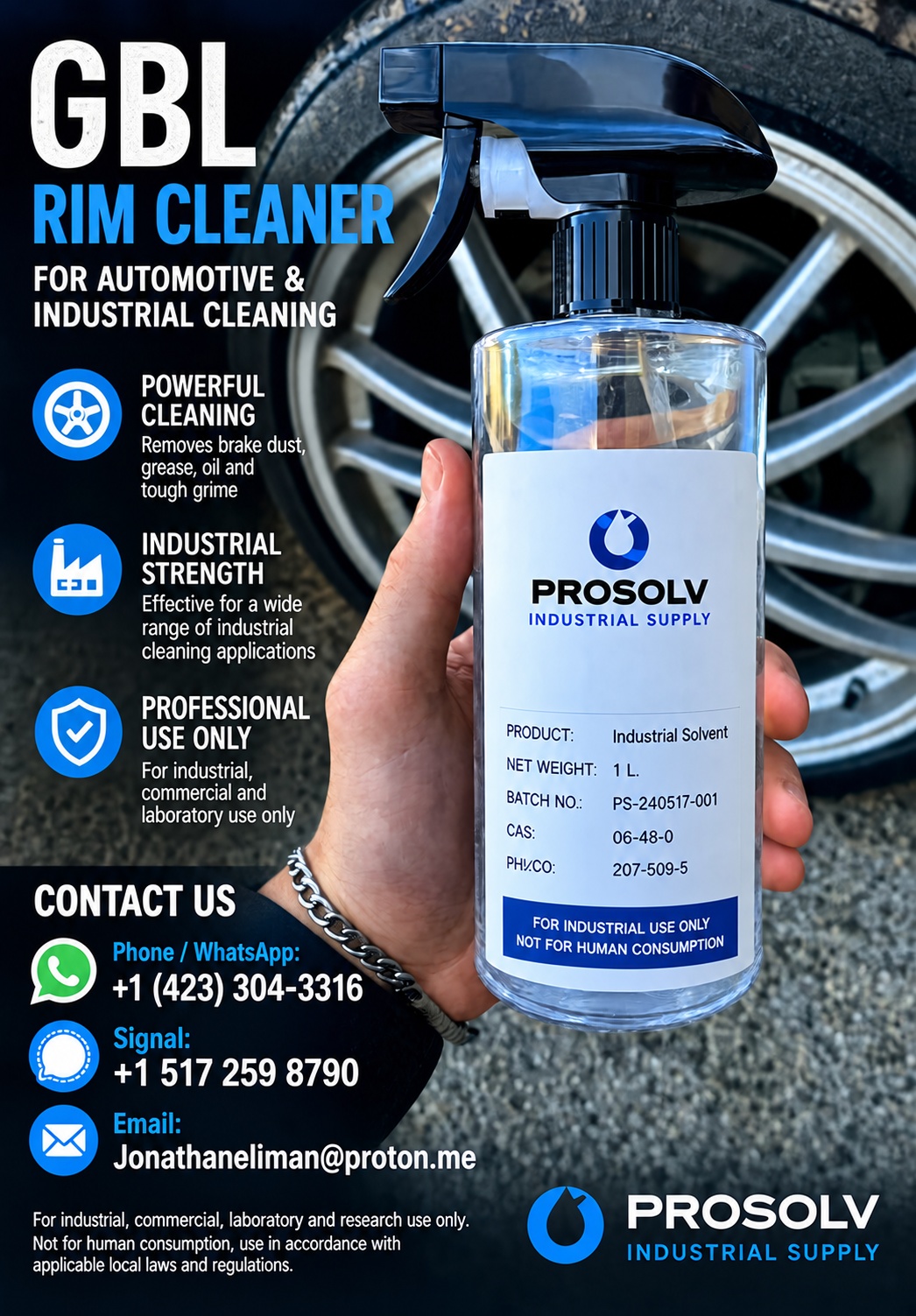
Products containing gamma-butyrolactone (GBL) should not automatically be considered conventional wheel cleaners. Their suitability must be established through reliable product documentation and appropriate safety guidance. Always follow applicable regulations and manufacturer instructions.
Product Information and Inquiries
For professional automotive cleaning supplies, product specifications, quotations, and general research inquiries, contact your supplier:
Contact & Private ChannelsFor quotations, bulk pricing, or research inquiries:
Email:Jonathaneliman@proton.me
WhatsApp: +1 (423) 304-3316
Telegram number:+1 585 317 2787
Signal number: 1 517 259 8790
Join our private Signal channel for exclusive research updates, promotions, and supply insights:https://signal.group/#CjQKID24jbOemhDvrQVXktJIW8bpMDNPHjSoxsJFroqQZFn-EhDe–ahniDUxSJIriBDKP8e
Confirm product specifications, availability, safety requirements, and shipping eligibility before placing an order.
A clean wheel completes the vehicle’s appearance. With suitable cleaning products, appropriate tools, and a consistent maintenance routine, automotive enthusiasts and professional detailers can achieve a cleaner finish while prioritizing surface protection and responsible chemical handling





You must Register or Login to post a comment