

About Us
When the conversation shifts to selecting the right equipment for aggressive chemical dosing, handling high-viscosity sludge, or maintaining consistent pressure under frequent start-stop conditions, the focus narrows entirely to technical performance. In a wastewater treatment scenario, for instance, a dosing pump needs to deliver polymer steadily at 1.08 L/h while its diaphragm resists weak acids and alkalis over thousands of cycles. In mining or heavy industrial settings, where slurry contains coarse solid particles, standard centrifugal impellers and mechanical seals fail quickly. That's where an industrial peristaltic pump proves its value: the hose is the only component in contact with the medium, and replacing it is far faster than overhauling a worn progressive cavity pump. Plus, the design inherently prevents clogging and leakage.
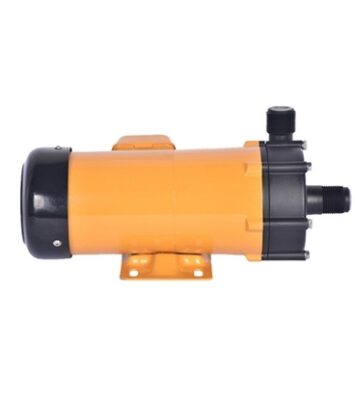
Different applications impose entirely different demands on pump construction. When low water pressure affects a multi-story building or an irrigation system, a water booster pump directly addresses the issue—automatic models from 0.5 HP to 1 HP can maintain 40 meters of head during peak demand. But for transferring oily wastewater or fibrous effluent, a stainless steel sewage pump with corrosion-resistant construction and non-clogging impeller handles solids smoothly without jamming. In applications where leakage is unacceptable—such as transferring electroplating solutions or flammable solvents—a magnetic drive pump eliminates the need for shaft seals entirely. With ceramic bearings and graphite bushings, these seal-less pumps operate reliably in chemical plants over extended periods. And when high-viscosity fluids like lubricants or syrups need gentle handling, a screw pump delivers low-shear transfer at speeds like 960 r/min, preserving the fluid's physical properties.
Many projects actually require multiple pump types across different subsystems. A fire protection loop demands a fire pump capable of high flow on demand, with reliable self-priming to handle entrained air. Laboratories or small pilot plants may need a compact bilge pump for general liquid transfer. Concrete pumping or tunnel boring relies on a heavy-duty mud pump built to withstand extreme abrasion from solids-laden slurries. ATO's product range spans these diverse applications—from 750W hydraulic electric units to multistage centrifugal pumps, from insulated hot oil pumps to water ring vacuum pumps. Each category is defined by concrete specifications: impeller geometry in multistage pumps, forced cooling fans in vacuum pumps, thermal insulation in high-temperature transfer pumps. These engineering details determine whether equipment becomes an asset or a liability on the plant floor.
Behind this breadth of products is a supplier focused on making specification straightforward. ATO has spent years building a catalog that lets engineers and procurement teams compare technical data across categories—from peristaltic pumps to self priming pumps—without juggling multiple vendor contacts for basic parameters. Whether the need is residential water pressure boosting or industrial wastewater treatment, lab-scale vacuum or heavy-duty hydraulic power, the emphasis stays on presenting clear specifications: material construction, power ratings, flow curves, and pressure limits. The goal is to let technical requirements drive the decision, with a product line deep enough to support everything from routine transfer to the most demanding fluid handling challenges.
Industrial Water Pump Supplier | ATO
When a pump fails mid-production or a new line needs precise chemical metering, technical specs drive the decision. You...