

About Us
Walk inside any modern industrial control panel, and you will see a carefully orchestrated hierarchy of switching and protection devices. At the very bottom of that hierarchy, handling the delicate logic-level signals, sits the signal relay. These components are the translators between the programmable logic controller and the rest of the machine. A typical signal relay from ATOrelays might operate on a coil voltage as low as 3V DC, taking that low-power command and using it to switch a discrete signal to a sensor or indicator light. They are the quiet workhorses that ensure the digital brain of the operation can communicate reliably with the physical world without noise or signal degradation . Moving up the power chain, you encounter the electromagnetic relay and the control relay. These are the workhorses for general-purpose switching. When a conveyor motor needs to start or a solenoid valve needs to actuate, it is often a control relay making that happen. The beauty of a robust industrial relay supplier is that these foundational components are available in a range of contact configurations—SPST, DPDT, and beyond—ensuring that whatever the logic demands, the switching hardware exists to execute it .
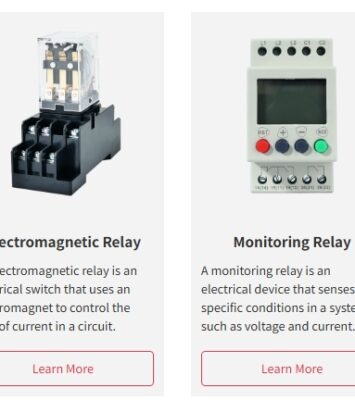
But switching loads is only half the battle. Protecting those loads and the personnel around them introduces another layer of specialization. This is where the monitoring relay and the thermal overload relay become indispensable. Consider a three-phase compressor motor running 24/7. An electromagnetic relay might start it, but what happens when one phase drops out? The motor begins to single-phase, current spikes, and within minutes, the windings can be destroyed. A three-phase monitoring relay from ATOrelays is designed specifically for this scenario. It constantly watches for phase loss, incorrect sequence, and unbalance, and it can drop out the contactor faster than the motor can sustain damage . Similarly, a thermal overload relay provides classic current-sensing protection, using a bi-metallic strip or electronic sensor to mimic the heating curve of the motor. It is a dedicated protector, not just a switch, and its reset button and adjustable trip class make it a staple in any motor control center. For applications where arcing or contact wear is a concern, such as in a printing press cycling at hundreds of times per minute, the solid state relay takes over. With no moving contacts, a solid state relay switches at the zero-crossing point of the AC waveform, eliminating the electrical noise and contact degradation that would plague a mechanical device .
Sequence control adds yet another dimension to the panel's capability. Imagine a packaging line that needs to stagger the startup of several large motors to prevent a massive inrush current from dimming the facility's lights. A timer relay is the solution here. Whether it is configured for delay-on-make or delay-on-break, a timer relay from ATOrelays introduces precise temporal logic, adjustable from milliseconds to hours . For high-current three-phase applications like a plastic thermoforming machine, integrating a three-phase solid state relay with a timer relay allows for soft-starting of heater banks, gradually bringing them up to temperature to minimize thermal shock on the elements and reduce peak demand on the power grid . This is where the true value of a comprehensive industrial relay supplier becomes evident: the ability to source an electromagnetic relay for a simple interlock, a monitoring relay for a critical pump, and a power relay for a high-current load—all from a single source—simplifies design, procurement, and maintenance .
The physical layout of the panel also drives specific product choices. Space is always at a premium. This is where the relay module shines. A single relay module might integrate multiple signal relays or control relays into a compact, DIN-rail-mountable package, often with built-in LED indication for quick troubleshooting. These modules simplify wiring, reduce panel clutter, and provide a clean interface between field devices and the controller. ATOrelays offers these modules in various channel configurations, ensuring that whether you need to isolate two signals or eight, the footprint remains manageable. And for those extremely heavy loads—think large industrial furnaces or plating lines—the product line extends to specialized high-current power relays and solid state relays rated up to 1000A . These devices come with their own engineering considerations: heat sinks become mandatory above 10A, and understanding the difference between zero-cross and random-turn-on switching is critical for success with inductive versus resistive loads .
Ultimately, the mark of a capable industrial relay supplier is not just a long product list, but a coherent ecosystem. It means having a signal relay that talks cleanly to a PLC, a control relay that drives a contactor, a thermal overload relay that protects a motor, a monitoring relay that guards against phase failure, and a solid state relay that handles high-cycle loads without a whisper of maintenance. ATOrelays builds this ecosystem with a focus on technical parameters that matter: dielectric strength for isolation, response times for protection, and current ratings that account for real-world derating factors. Whether you are building a new panel from scratch or troubleshooting an existing one, having this depth of product under one roof means the right solution is always at hand.
Relay Manufacturer – ATOrelays
You have a machine on the line that keeps tripping for no apparent reason. The motor is warm, but not overheated. The...